

 Gerard
Discovering your hot water system is leaking is super inconvenient and should be sorted straight away.
The good news is that not every leak spells disaster. The bad news is that waiting too long can cause big problems. Acting quickly can mean a small repair cost instead of a big one.
In this guide, GXR Plumbing and Gas explains what causes a leaking hot water system. We talk about what each leak means and how to respond safely. We also discuss when to repair or replace items and how to prevent recurring leaks.
We’ll cover hot water system leaks from the bottom, the top, the release valve, the overflow pipe, and the pressure relief valve, every scenario, all in one place, so you can be prepared.
Why is my hot water system leaking?
Hot water systems are basically big pressurised tanks that hold from around 135 to 400 litres of hot water.
With most appliances, with that kind of pressure and heat, there are a few places on the system where leaks can gradually develop over time.
The most common culprits are:
A faulty temperature and pressure relief (TPR) valve
A faulty valve is the most frequent cause of leaks and often looks more alarming than it actually is.
Watch for continuous dripping, a constant hissing sound, visible rust or mineral buildup around the valve, a lever that feels stuck when tested, or water consistently pooling at the base of the unit from the overflow pipe.
Internal tank corrosion

Corrosion typically develops from the inside of the tank. This means there are often no visible warning signs until the tank is already failing, by which point replacement is the only option.
Rusty or discoloured water from your hot taps is one of the earliest indicators, along with a metallic taste or smell. Regular anode rod replacement is the most effective way to slow corrosion, as the rod is designed to corrode in place of the tank itself.
Loose or deteriorated pipe fittings and connections
Loose pipe fittings and connections expand and contract with temperature changes, gradually wearing down seals.
Pipe fittings and seals don’t follow a fixed replacement schedule. They’re typically replaced when wear and tear or leaks are detected, ideally during a routine plumber inspection every 2–3 years.
A damaged or faulty drain valve
Drain valves are located at the base of the tank and are used to flush sediment. These valves can deteriorate over time, causing them to leak even if fully closed.
It’s one of the more straightforward and inexpensive repairs a plumber can carry out, usually without needing to touch the rest of the system.
High water pressure
When the incoming mains pressure is too high, it places excessive stress on the entire system. High water pressure accelerates wear on valves, fittings, and the tank over time. If your temperature and pressure relief valve frequently triggers or your pipes rattle, pressure may be the cause. A licensed plumber can test your incoming water pressure and install a pressure-limiting valve on the cold-water supply if needed.
Sediment buildup

Sediment buildup occurs when mineral deposits accumulate inside the tank over time, accelerating corrosion from the inside out.
This is particularly common in areas with hard water, where minerals like calcium and magnesium dissolve into the water supply and settle at the bottom of the tank as it heats up.
Over time, the layer of sediment acts as a barrier between the heating element and the water, forcing the system to work harder, increasing energy bills, and shortening the tank’s lifespan.
Flushing the tank every few years as part of a routine service is the most effective way to manage buildup and keep the system running efficiently.
Age and general wear
Most hot water systems are designed to last 10–15 years; after 8 years, the risk of leaks increases significantly.
Understanding where the leak is coming from is just as important as knowing why. The location tells you a lot about the severity and what kind of repair or replacement you are looking at.
Spotting the early warning signs of a hot water system leak
A significant leak can be obvious. But the early warning signs are easy to miss, and catching them early can save you hundreds or even thousands of dollars.
Watch out for:
- Unexplained rises in your water bill. Even slow drips waste more water than you’d think, and it will most likely show up on your next bill.
- Damp patches or water stains. Have a look at the floor, wall, or ceiling near your hot water unit and try to identify where the water is coming from.
- Rust or corrosion. Have a look at the outside of the tank or at the pipe fittings.
- Discoloured or rusty-looking hot water. If brown water is coming from your taps, this signals internal corrosion.
- Inconsistent water temperatures. If your hot water is fluctuating more than usual, a hidden leak could be affecting pressure and heating performance.
- Musty smells. Odd smells around the unit can indicate moisture and early mould growth.
- The sound of dripping or running water when all taps are turned off.
Don’t dismiss small damp patches as condensation.
By the way, condensation can occur when cold water enters a warm tank, but if you wipe the area dry and water reappears, you likely have an actual leak. Monitor it closely and call an experienced plumber if the leak persists.
What each location of a leaking hot water system tells you
The location of the leak is your best diagnostic clue for determining how serious it is and whether a plumber is needed.
Hot water system leaking water from the top
A hot water system leaking from the top is usually the most manageable scenario. Leaks at the top of the tank usually come from:
Inlet or outlet pipe connections
Inlet and outlet connections can loosen over time, especially as pipes expand and contract with changing temperatures. Tightening the connections or replacing a worn washer or seal is all that’s needed.
The anode rod

The sacrificial anode rod inside your tank is designed to corrode slowly, so the tank itself doesn’t. Hence the name sacrificial anode. When it’s fully corroded, it can cause leaks from the top. Replacing an anode rod is an inexpensive fix that can extend your system’s life and prevent leaks.
A sacrificial anode rod typically needs to be replaced every 3 to 5 years, depending on your water quality and usage. But it should be routinely inspected every 1 to 2 years to gauge its wear.
The cold water inlet valve
If water is leaking from the top valve, it may need to be tightened or replaced.
Urgency level: Moderate. Address within a few days to a week. Top leaks are usually fixable without replacement.
Under Australian plumbing standards and the Western Australian Plumbers Licensing and Plumbing Standards Regulations, all three of the maintenance tasks detailed below must legally be carried out by a licensed plumber.
While recent WA plumbing reforms allow homeowners to perform basic DIY tasks (like replacing a standard tap washer or showerhead), servicing, repairing, or altering any component of a hot water system remains strictly regulated.
Hot water system leaking from the bottom
A hot water system leaking from the bottom is the most urgent scenario and requires attention as soon as possible.
Water pooling beneath your unit typically points to:
Internal tank corrosion
Over time, the tank’s interior corrodes due to neglected maintenance or due to the tank’s age. This can eventually lead to pinhole leaks or larger failures. Once the tank itself is corroded, it cannot be repaired. Replacement is most likely the option.
A faulty drain valve

There’s a drain valve at the base of every tank used for maintenance and draining. These valves can fail over time and begin to leak water. A licensed plumber can replace a drain valve quite easily. If you suspect a faulty drain valve, it’s best to have a plumber confirm as soon as possible that it’s not anything more serious.
The overflow pipe is redirecting water
Don’t assume a leak at the bottom of the tank is originating from the bottom. On most systems, the overflow pipe from the pressure relief valve (located higher up) runs down the side of the unit and discharges water at the base. Try to trace the leak back to its original source. A torch can help with visibility if needed.
Hot Water System Leaking from the Release Valve
The temperature and pressure relief (TPR) valve is one of the most important safety features in your hot water system.
It’s designed to open and release water if the pressure or temperature inside the tank exceeds safe levels, preventing the risk of explosion.
A small, occasional drip from the TPR valve is completely normal. But constant or significant leaking from the release valve is not. It’s telling you one of several things:
- The valve itself is faulty – over time, TPR valves can degrade, or debris can get stuck in the seat, causing them to leak continuously.
- The system pressure is too high – if your mains water pressure exceeds the recommended range, it places the TPR valve under constant stress. A pressure limiting valve (PLV) installed on the cold water supply can fix this.
- The thermostat is set too high – Australian standards recommend hot water systems be set to 60°C. Higher settings cause the water to expand excessively, triggering the relief valve.
- The expansion control valve has failed – in closed systems, it manages thermal expansion. If it fails, the TPR valve picks up the slack.
What you can do yourself
Check your thermostat setting. If it’s above 60°C, turn it down. You can also gently lift the test lever on the TPR valve 3 to 4 times to flush any debris that may be blocking the seat. This sometimes resolves minor weeping immediately.
If the valve continues to drip persistently after this, it needs professional attention. A faulty TPR valve should never be ignored; it’s a safety device, not just a convenience component.
In Western Australia, any repair or replacement work on hot water system valves and pipework must be carried out by a licensed plumber. This is a legal requirement under the Plumbers Licensing Act 1995 — attempting this work yourself or using an unlicensed tradesperson is illegal and may void your insurance.
Hot Water System Leaking from the Overflow Pipe
Your overflow pipe (also called the discharge pipe) connects to the TPR valve and runs down the side of the unit near the ground. It’s designed to safely direct any water released by the valve away from the unit.
If you’re seeing water consistently coming from the overflow pipe, the causes are the same as above: high pressure, a faulty TPR valve, an overheating system, or a failed expansion valve.
However, an overflowing pipe can sometimes be mistaken for a bottom tank leak because the water pools at the base.
Additionally, watch for:
- Any blockage in the overflow pipe, such as debris, can partially obstruct it, causing water to back up and drip inconsistently.
- Pipe damage: if the overflow pipe itself is cracked or poorly sealed at a joint, it will drip even when the TPR valve is functioning correctly.
Hot Water System Pressure Relief Valve Leaking
We’ve touched on this previously, but the pressure relief valve deserves more context as it’s frequently misunderstood and misdiagnosed.
Intermittent, small releases of water from the PRV are normal and by design. The valve is doing exactly what it’s supposed to do. It’s relieving temporary pressure spikes inside the tank.
You should be concerned when:
- Water is dripping or flowing continuously from the PRV, not just occasionally.
- The volume of water being released seems significant.
- You can hear a constant hissing sound from the valve area.
- There are mineral deposits or rust staining around the valve, indicating chronic leaking.
Many homeowners panic when they see any water near the relief valve, but a quick drip after a hot shower (when the system heats up rapidly) is not unusual. The test is whether it stops once conditions stabilise.
What to do immediately if you discover a leaking hot water system

Regardless of where the leak is coming from, follow these steps:
Step 1: Don’t panic, but act as soon as possible
Small leaks left unattended can become big problems. Even a minor leak can signal internal corrosion, and water damage to floors and walls accumulates quickly.
Step 2: Turn off the power or gas, depending on your system
- Electric hot water system: Find the dedicated circuit breaker in your switchboard (it should be labelled) and flip it off.
- Gas hot water system: Turn the gas control knob on the unit to the “pilot” or “off” position. Do not use electrical switches if you suspect a gas leak. Leave the premises and call your gas supplier first.
- Solar hot water system: Switch off at the circuit breaker and turn off the cold water supply.
Never leave power running to a hot water system that is actively leaking. If water comes into contact with electrical components, you may have a serious safety hazard.
Step 3: Turn off the water supply
There should be an isolation valve on the cold-water inlet pipe leading to the bottom of your hot-water unit. Turn this clockwise to shut off water specifically to the system.
If you can’t locate or operate this valve, turn off the mains water supply at the front or side of your property (in units or apartments, check under the laundry tub or kitchen sink, or contact your strata manager).
Stopping water flow into a leaking system limits further water damage and takes the pressure off whatever is failing inside.
Step 4: Contain and document
Place towels or buckets to contain the water. Take photos of the leak location, any visible corrosion, and the area around the unit. This documentation is useful for your plumber’s diagnosis and for any insurance claims.
Step 5: Call a licensed plumber
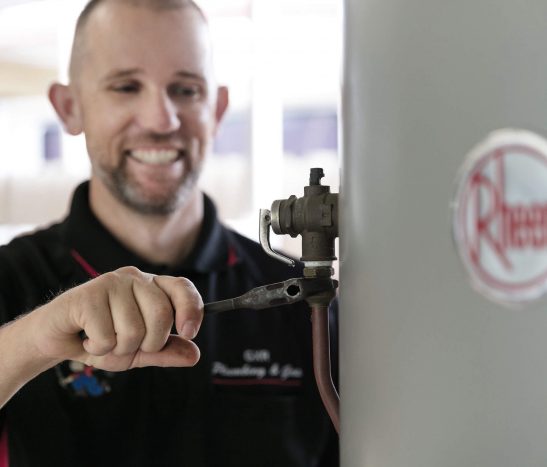
Unless the leak is something as simple as a slightly dripping PRV (which you can monitor briefly), it’s time to call in a professional.
Hot water systems combine heat, high pressure, electricity or gas; this is not the territory for DIY repairs but for trained professionals.
A licensed plumber will:
- Accurately diagnose the source of the leak (not just the symptom).
- Carry out repairs that meet Australian plumbing standards and regulations.
- Advise you honestly on repair vs replacement.
- Ensure your warranty isn’t voided by improper work.
Repair vs Replace: How to Make the Right Call
Lean toward repair if:
- Your system is under 8 years old
- The leak is from a valve, fitting, or connection (not the tank itself)
- The repair cost is less than 50% of the replacement cost
- The system is otherwise performing well (consistent temperatures, no discolouration)
Lean toward replacement if:
- Your system is over 10 years old
- The tank itself is leaking (corrosion, cracks, pinhole failures)
- You’ve had repeated repairs in the last 12–18 months
- Repair quotes are coming in close to the cost of a new system
- Your energy bills have been climbing despite no change in usage
When replacing, consider it an opportunity to upgrade. Hot water technology has improved significantly and can deliver significant long-term savings on your energy bills compared to constant repairs.
How Long Should a Hot Water System Last?
Most Australian hot water systems are designed to last 10–15 years, though this varies considerably depending on:
- Water quality: Hard water with high mineral content accelerates internal corrosion and sediment buildup. Whole-home filtration systems can reduce the amount of hard water entering your home and appliances.
- Maintenance history: systems that have been regularly serviced (including anode rod checks and TPR valve testing) consistently outlast neglected ones.
- Climate: coastal environments with salt air accelerate external corrosion on tanks and fittings.
- Age of the system: Check the manufacturer’s plate on the unit. It should have the date of manufacture printed on it (sometimes under a plastic cover). If your system is approaching or past the 10-year mark, a proactive inspection is a smart move even if you haven’t noticed any leaks yet.
Preventing hot water system leaks: a maintenance checklist

Every 6 months
- Test the TPR (pressure relief) valve by gently lifting the lever and allowing it to snap back. This prevents mineral buildup from sealing the valve shut
- Check around the unit for any signs of moisture, rust staining, or corrosion.
Every 2–3 years
- Have a licensed plumber inspect the anode rod and replace it if it is significantly corroded. This is the single biggest factor in extending tank life.
- Check the water pressure at the inlet. If it’s consistently above 500 kPa, a pressure-limiting valve should be installed.
Every 5 years (or as recommended)
- Full professional service of the unit completed by a plumber, including all valve checks and inspection of internal components.
- Flush sediment from the tank (particularly important in areas with hard water).
Keeping up with maintenance is almost always cheaper than dealing with a premature failure.
Why Choose GXR Plumbing and Gas?
At GXR Plumbing and Gas, we’re licensed plumbers and gas fitters who specialise in hot water system repairs, installation, and maintenance. We work on all system types, electric, gas, solar, and heat pump and across all major brands.
When you call us, you get:
- Fast response times: We know that no hot water is not just inconvenient, it’s disruptive to your whole household.
- Honest advice: we’ll tell you when repair is the right call and when it’s genuinely not worth it.
- Fully licensed and insured: all work meets Australian standards, protecting your warranty and your insurance.
- Transparent pricing: no hidden call-out surprises.
Whether you’re dealing with a hot water system leaking from the bottom, a leaking pressure relief valve, or you’re just not sure where the water is coming from, give GXR Plumbing and Gas a call. We’ll get it sorted.
Frequently Asked Questions
Is it normal for a hot water system to drip a little?
A small, occasional drip from the pressure relief valve is normal. However, a constant drip or any water coming from other parts of the system is not normal and should be inspected by a licensed plumber as soon as possible.
Can I fix a leaking hot water system myself?
Minor tasks, such as testing the TPR valve, are safe for you to perform. Any work involving gas lines, electrical connections, pressurised components, or tank replacement must be carried out by a licensed plumber. DIY repairs risk voiding your warranty, breaching Australian plumbing regulations, and creating serious safety hazards.
How long does a hot water system repair take?
Most valve replacements and fitting repairs are completed in under two hours. A full system replacement usually takes around half a day.
What temperature should a hot water system be set to?
Australian standards recommend setting storage hot water systems to 60°C. This prevents bacterial growth while keeping system pressure at a safe level. If your thermostat is set above 60°C, lowering it will reduce wear on the system and lower your energy bills.


